Clinical Director, Dr Seb Thompson, shares his thoughts around the importance of reading on children’s wellbeing and why it still matters.
Long before books, people told stories around campfires, passing them down through generations. Storytelling has always helped us make sense of ourselves, each other and the world.
In my work as a psychologist, I often think about what helps children feel safe, connected and understood. Stories sit quietly at the heart of this. They support children’s mental wellbeing by giving them a safe way to explore big feelings and tricky situations. Through books, children can experience sadness, courage or difference at a comfortable distance. Stories also help children find words for feelings they may not yet understand. Being able to name emotions is a key step in learning how to manage them and ask for support when needed.
During Children’s Mental Health Week, we were reminded how important it is for children to feel that they belong. Reading helps nurture that sense of belonging. When children see themselves reflected in stories, they receive a powerful message: you matter. When they read about lives different from their own, they build empathy and understanding. Both experiences shape how they see and engage with the world.
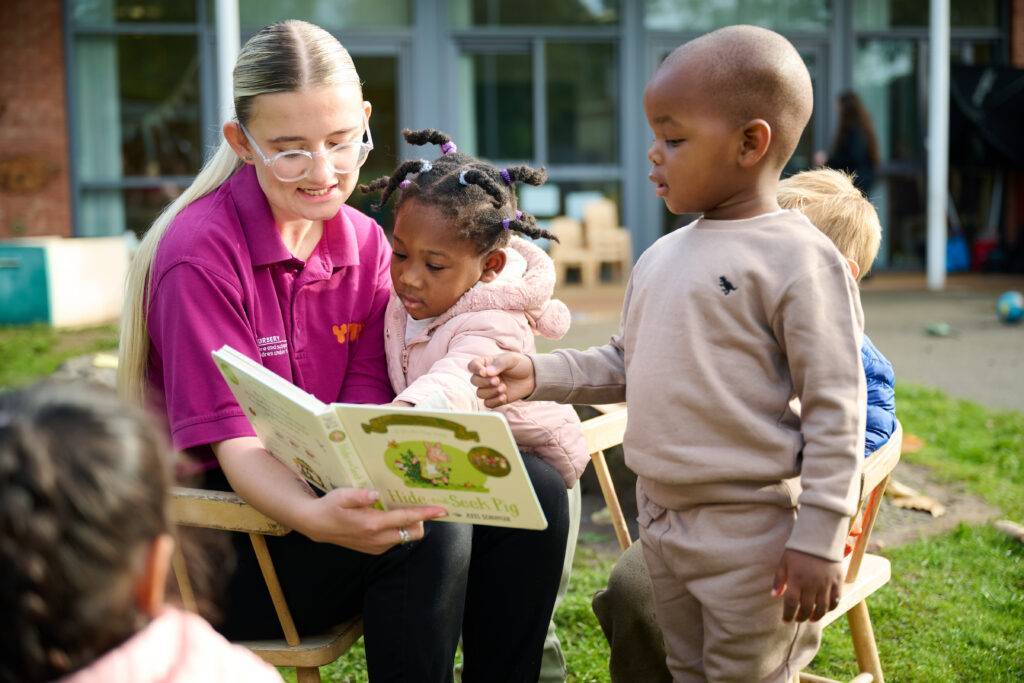
Reading together also strengthens relationships. A child leaning into an adult at story time, a favourite book read over and over, the familiar rhythm of turning pages, these moments build more than literacy skills. They build connection. In a busy world, reading invites us to slow down and be present with one another.
At YMCA Robin Hood Group, World Book Day is about making space for stories in everyday moments. In our nurseries, reading is woven into daily life. Our teams are developing special book corners, inviting colleagues to share their favourite stories, and dressing up as beloved book characters – with a prize voted for by the children themselves.
This World Book Day, we invite you to pause and notice the power of reading. Notice the child who chooses the same story repeatedly. Notice how a room grows calm when a story begins. Notice the connection that forms when we simply sit and read together.
Long after the details of a story fade, the feeling of being read to – of being close, safe and connected – often stays with a child. And sometimes, that feeling is what matters most.
Dr Seb Thompson
Clinical Director for YMCA Robin Hood Group